

Skip to content
Software Development Online · Online computer science & digital skills training
Build the knowledge behind technology

Learn how computers work. Then learn how to think like a programmer.

A structured three-course pathway that starts with practical computer literacy, develops the logic behind coding, and progresses into the fundamentals of program design.

  • Beginner-level pathway
  • Recommended from age 15–16+
  • Certificate of completion
learning_pathway.sdo
Recommended progression
01Mastering Computer Literacy12 hrs
02Processing & Logic Behind Coding13 hrs
03Designing Programs13 hrs
3Core computer courses
38 hrsCombined course duration
15–16+Recommended starting age
R450Courses from
The SDO learning pathway

Start with foundations. Progress with purpose.

The three courses are designed to make sense as a sequence: first become confident with computers and common software, then understand the logic that underpins coding, and finally apply those concepts to program design.

Recommended order: Mastering Computer Literacy → The Processing and Logic Behind Coding → Designing Programs.
Core study programmes

Three courses. One clear progression.

Choose a single course or follow the recommended sequence to build a broader foundation in computer science concepts and program design.

Mastering Computer Literacy course
Digital foundations

Mastering Computer Literacy

Learn the practical tools and concepts needed to work confidently with computers and common software in today's technological world.

Beginner12 hoursCertificate
  • Hardware, software and operating systems
  • Networks, internet, cloud computing and security
  • Windows 10 and data management
  • Outlook, Word, Excel, Access and PowerPoint
The Processing and Logic Behind Coding course
Computational thinking

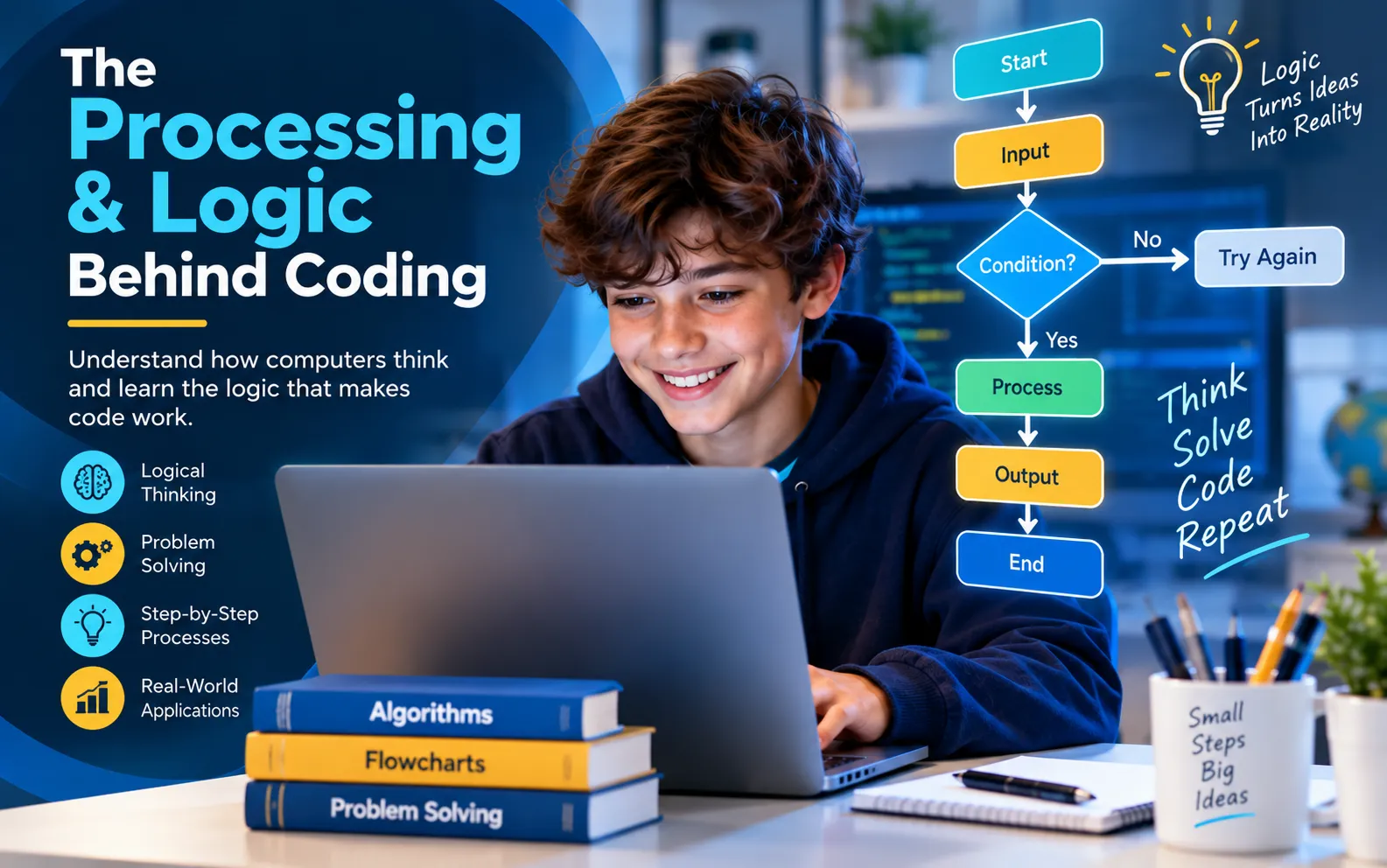
The Processing & Logic Behind Coding

Build the reasoning foundations behind computer programming through number systems, logic concepts and algorithm design.

Beginner13 hoursCertificate
  • Number systems and arithmetic
  • Logic gates, truth tables and Boolean algebra
  • Decision tables, system and program flowcharts
  • Trace tables, variables, loops and pseudocode
Designing Programs course
Program design

Designing Programs

Progress from coding concepts into the structured design of sequential, conditional and repetitive programs.

Beginner13 hoursCertificate
  • Programming languages, concepts and data types
  • Operators, control structures and syntax
  • Arrays, functions and file handling
  • Sorting and searching algorithms
Designed for focused learning

Computer knowledge that builds in layers.

The curriculum moves from everyday computer capability into the abstract thinking used in coding and then into practical program-design concepts.

01

Start at beginner level

The pathway begins with accessible foundations before moving into more technical concepts.

Learn the “why” behind code

Logic, number systems, flowcharts and pseudocode help make programming concepts understandable.

</>

Progress into program design

Apply the foundations to control structures, arrays, functions, file handling and algorithms.

Complete with a certificate

Each of the three core courses currently includes a certificate of completion.

A separate pathway for younger learners

Coding & Robotics begins long before a first line of code.

Little Code introduces younger children to coding concepts through play-based, unplugged activities. The programme uses practical real-life items rather than computers or tablets and is available in English and Afrikaans.

Little Code at a glance

  • Play-based introduction to coding concepts
  • No computers or tablets required for the activities
  • English and Afrikaans options
  • Lesson plans, vocabulary and activity instructions
  • Builds problem solving and logical thinking
  • Supports creativity, teamwork and perseverance
Ready to begin?

Choose your starting point.

New to the field? Begin with Mastering Computer Literacy. Already comfortable with everyday computing? Explore the logic and program-design courses next.